



Humber Biplane Poses for a Photograph With the “Yoked Oxen Attached to the Native Land Vehicle”
Aviation History
December 1910
A Biplane Poses for a Photograph in Mumbai With the
“Yoked Oxen Attached to the Native Land Vehicle.”
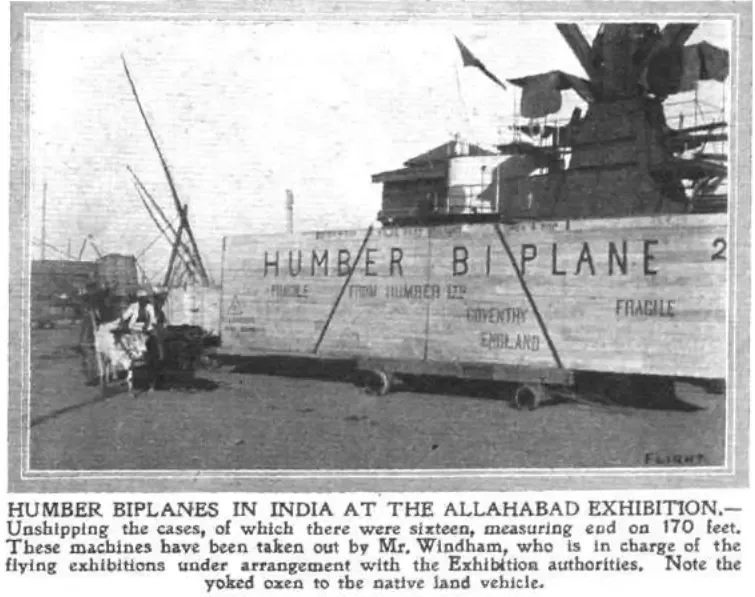
The Flight Magazine, December 24, 1910
In December, 1910, Sir John Hewett, the Lieutenant-Governor of the United Provinces and a member of Commerce and Industry in the Viceroy’s Council decided to avail the opportunity of the Kumbh Mela to be held in Allahabad in December-Feb 1910 to promote “trade and commerce” by exposing Indian populace to the “Latest Technologies”.
He made a request was made to Mr. W.H. Windham who had founded of “The Aeroplane Club, England” (later also known as Commander Sir Walter H Windham) by the Government of United Provinces to “take some aeroplanes for education purposes to the Allahabad Exhibition”. Mr Windham in turn engaged two
pilots Mr. Keith-Davies and Mr. Pecquit and shipped the aircraft to Bombay (Mumbai) and later by special trucks to Allahabad. The first flight took place in Allahabad on December, 10 1910.
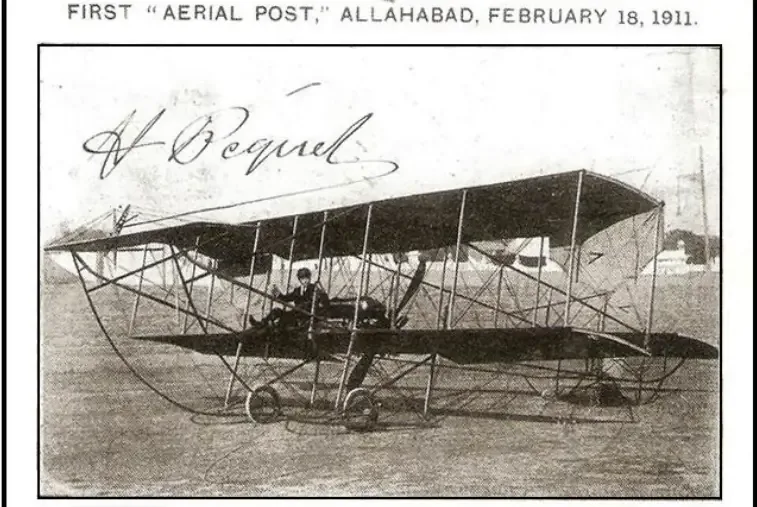
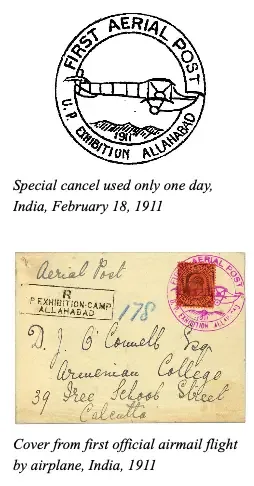
Thereafter, history was made on February 18,1911 when the World’s first Airmail flight took place in Allahabad.
The arrival of the planes packed in Sixteen cases aboard a ship was met at the docks by a “Native Land Vehicle” and the event was duly recorded in the photograph.
Below is the photograph sourced from the Smithsonian National Postal Museum recording the first “Aerial Post” flight of February 18, 1911 as a part of a marketing campaign strategy designed to capture headlines.
However some enterprising individuals in the colonial India had already started experimenting on their own, well aware of the potential of “Aviation”
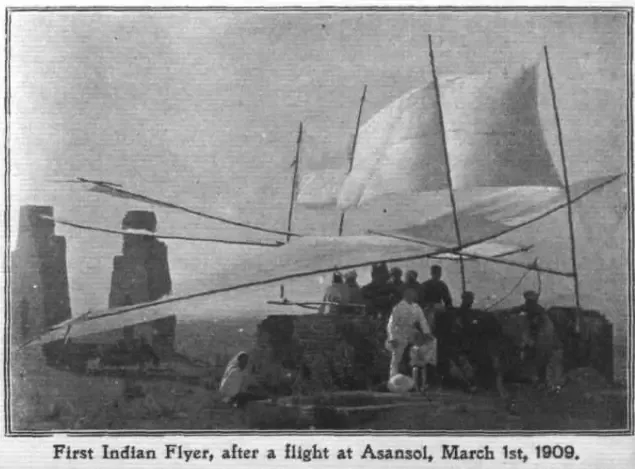
Image 1
Image 1: This claim of “Gliding” a distance of 20 Yards was made by Engineer O. H. Drewer, of the Sarpukuria and Asansol Collieries Limited. HE had mounted the “aeroplane” on board a truck and had gotten airborne from it as it sped along a road. The claim added “unfortunately I had no motor, or would have made a much longer flight”
This claim of “Gliding” a distance of 20 Yards was made by Engineer O. H. Drewer, of the Sarpukuria and Asansol Collieries Limited. HE had mounted the “aeroplane” on board a truck and had gotten airborne from it as it sped along a road. The claim added “unfortunately I had no motor, or would have made a much longer flight”
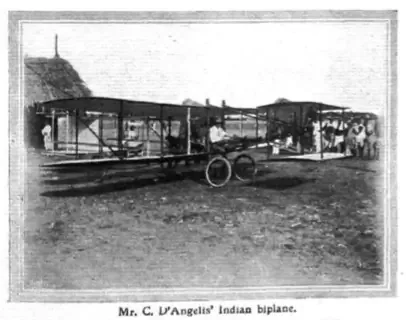
Image 2: An Indian Bipalane
Image 2: This image titled “The Indian Biplane” was forwarded by “E and A Levetus And Co., to the Flight Magazine (March 26,1910) Requesting for information about availability of High power Engines.
These were required for a Biplane constructed by one of its customers Mr. C D’Angelis from “entirely” his own designs.
As an aviation enthusiast you would probably realise that today too we face the same issues of the availability of indigenous “High Powered Engines” for the Airframes being built in India.
A true “Atamnirbhar Push” is therefore the need of the hour or we may continue to be subjected to various “trade and promotion” activities in the aviation sector which commenced during the Kumbh Mela of 1910 !!!!